Rossington Architecture
  On The Boards More Residential Home
Rossington Architecture Welcome
 
Other Project Types

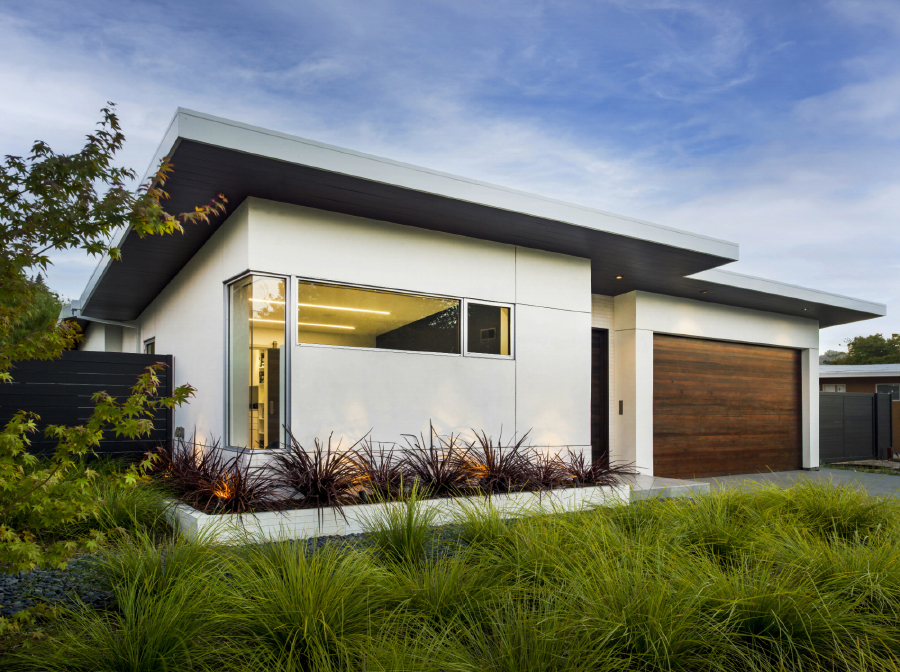
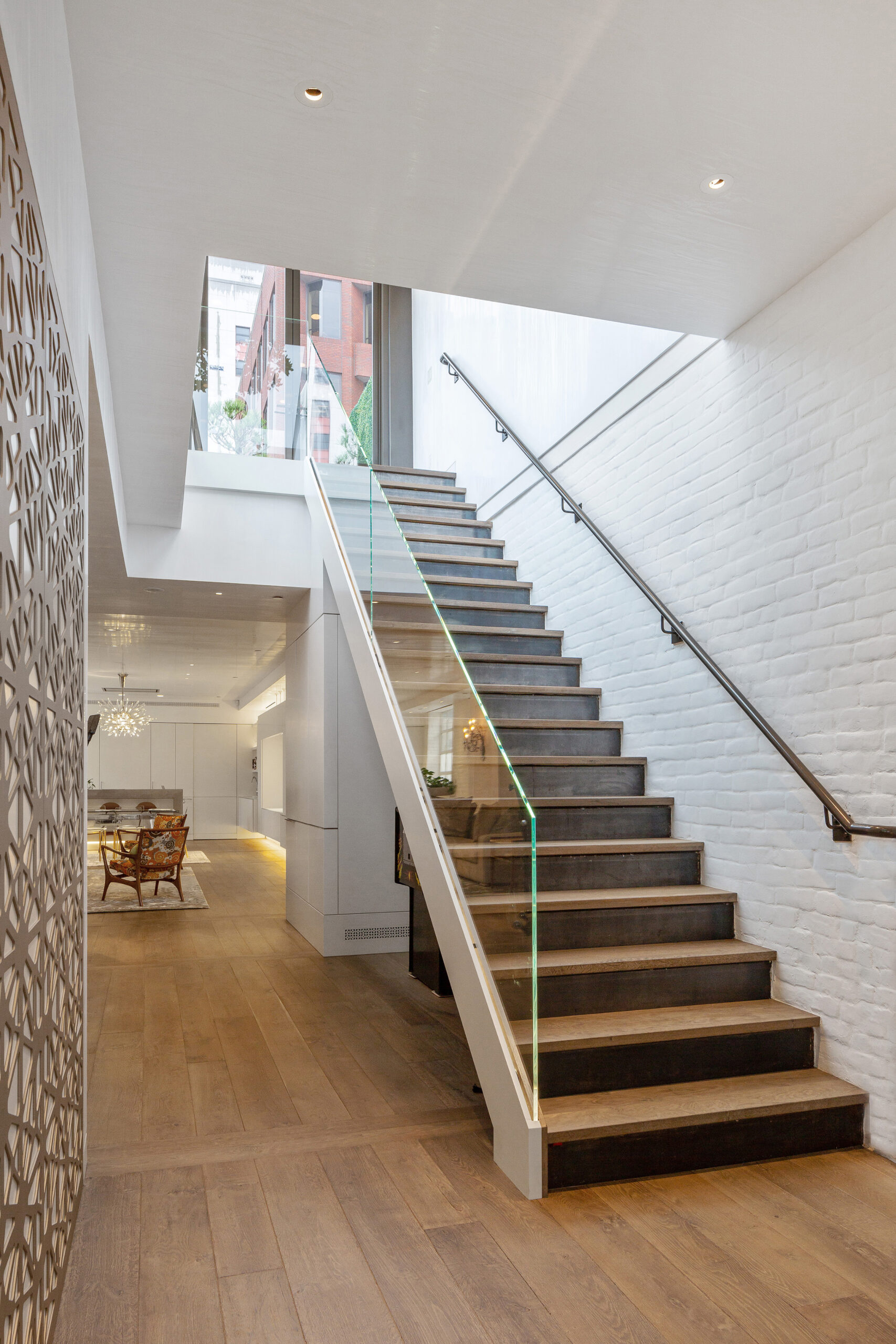
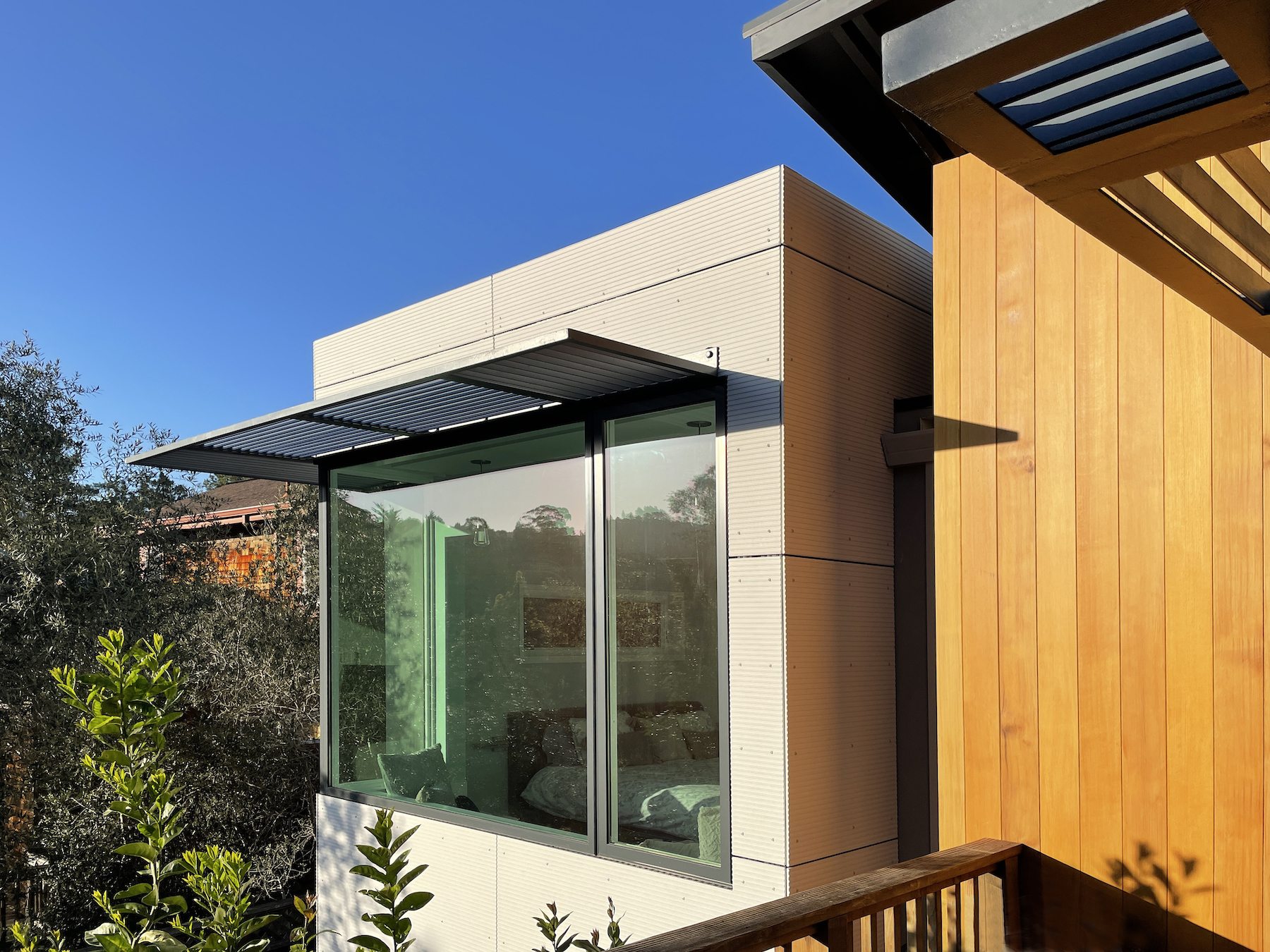
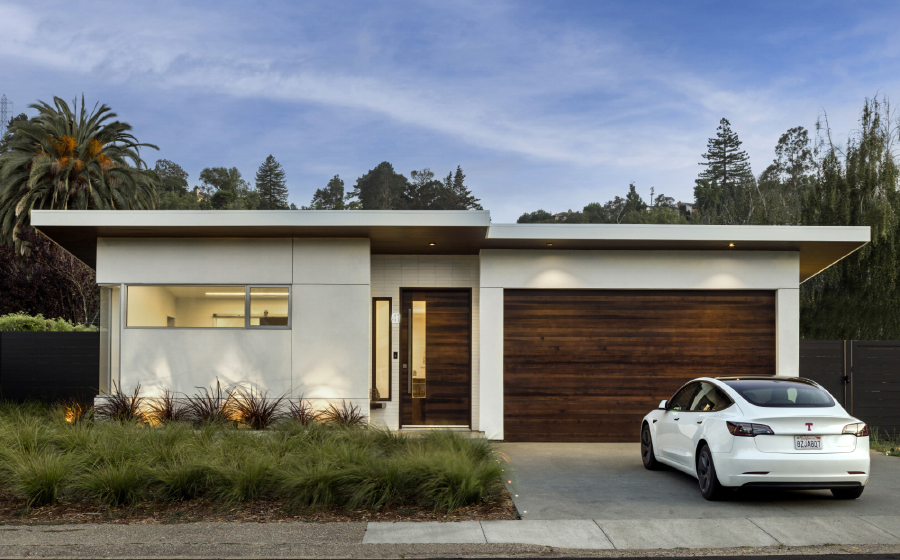
Rossington Architecture is a full-service architectural firm dedicated to excellence in design and project management. Founded in 1999, the firm's work focuses on residential projects, including additions, renovations, new homes, multi family housing and mixed use. Projects have also included a yoga studio, two rock climbing gyms and a corporate retreat in Shanghai, China and various commercial projects. The work is based in modernity and is derived directly from its context, taking cues from existing conditions and carefully interpreting the needs of the client. Detailing is kept purposefully clean, simple and timeless.

We are strong proponents of environmentally sustainable projects and enjoy working with clients and contractors crafting green, workable solutions based on myriad concerns, including budget. Phil is proud to have recently become a Certified Green Building Professional, from Build It Green, whose mission it is to promote healthy, energy- and resource-efficient building practices.

We are San Francisco Bay Area architects, passionate about architecture, its relationship to the immediate community and the world at large. Please call us today for a free consulation on your project.


A Vision For Transforming San Francisco’s “Unaccepted Streets”

March 8th, 2010

Via sf.streetsblog.org
by Matthew Roth on September 24, 2009

Local_Code.jpg
A proposed design for an unaccepted street, from Local Code, courtesy Nicholas de Monchaux

Throughout San Francisco’s history, from the early street grid to the more recent expansion of freeways, slivers of land that don’t fit into the master plans of architects and designers have been cast aside, lumped into a category the Department of Public Works (DPW) refers to as "unaccepted streets." These "paper streets" are mapped but not maintained by any agency. As Chris Carlsson so beautifully chronicled in his Ghost Streets tour, many of these alleys and street stubs are cared for by neighbors and transformed into small gardens or pocket parks.  Many more, however, are forgotten urban scars and latent public space.

Berkeley Professor of Architecture Nicholas de Monchaux estimates that there are 529 acres of unaccepted streets, just over half the land area of Golden Gate Park. In Local Code [PDF], one of six finalists in UCLA’s WPA 2.0 design competition ("Whoever rules the sewers, rules the city"), de Monchaux details his vision for replenishing 1514 of these unaccepted streets by linking contemporary geospatial planning tools with existing public processes through the DPW to implement  "a range of local infrastructural gestures, from soil remediation, to victory gardening, to playgrounds and pastures."  

Local Code borrows from the work of  "anarchitect" Gordon Matta-Clark, who in the early 1970s discovered that New York City auctioned off pieces of unusable land that resulted from surveying anomalies and public-works expansion, so called "gutterspaces," fifteen of which he purchased and developed for Fake Estates, an architectural intervention meant to dissect notions of materiality, property ownership, and prestige.

With Local Code, de Monchaux hopes to accelerate the pace of converting streets into green spaces, particularly in the underserved neighborhoods in the shadows of freeways, where unaccepted streets are abundant.  "If you look at the unaccepted streets, it is like heat map of all the areas with health problems, pollution issues, and neglected spaces," he said.

Read the rest of this entry »

March 5th, 2010

Drink in hand, he settled into the numb nothingness of his self-imposed isolation.<br />
(Photo: Daniel Hennessy; Dwell, November 2006)

Drink in hand, he settled into the numb nothingness of his self-imposed isolation.

(Photo: Daniel Hennessy; Dwell, November 2006)

Via unhappyhipsters.com

Inspiration Innovation

March 4th, 2010

Unable to complete another painting, he surrendered to the realization that he was truly&#8230;madly&#8230;deeply in love—with plywood.<br />
(Photo: Richard Powers; Dwell, March 2009)

Unable to complete another painting, he surrendered to the realization that he was truly…madly…deeply in love—with plywood.

(Photo: Richard Powers; Dwell, March 2009)

Via unhappyhipsters.com

Australia’s guide to environmentally sustainable homes

March 3rd, 2010

Here’s an excerpt of a website from the Australian government with some good information and advice on energy usage and conservation. Via yourhome.gov.au:

The average household’s energy use is responsible for over seven tonnes of greenhouse gas emissions. These emissions can be significantly reduced through use of renewable energy, more efficient appliances and energy conservation measures. The Energy Use group of fact sheets shows you how.

Choosing the most appropriate energy source can significantly reduce your energy bills and improve the environmental performance of your home. A choice of energy sources is available to new home buyers, existing owners and tenants.

Conventional electricity from the supply grid currently produces the largest amount of CO2 of any energy source per unit of energy used, except in Tasmania where hydro electric power is the predominant source of electricity. Hydropower is used to a lesser extent in some other states, with fossil fuel power stations providing most of the electricity on the Australian mainland.

Renewable energy sources produce no greenhouse gases in operation and reduce or eliminate the need for additional coal fired power stations and large hydro-electric dams.

Natural gas produces only about one third the greenhouse gas emissions compared to conventional electricity.

Minimizing demand for energy through conservation and efficiency is the most cost effective means of reducing operational and environmental costs for all home owners and tenants.

Space heating and cooling and water heating account for nearly 63 per cent of household energy use.

Read the rest of this entry »

Unhappy Hipsters

February 5th, 2010

These are great! Here are a few recent posts from this great satirical Tumblr, Unhappy Hipsters:


Sure she was watering a street tree during a statewide drought. But the gate was made of recycled street signs. Carbon footprint: neutral.<br />
(Photo: Randi Berez; Dwell, Dec/Jan 2006)

Sure she was watering a street tree during a statewide drought. But the gate was made of recycled street signs. Carbon footprint: neutral.

(Photo: Randi Berez; Dwell, Dec/Jan 2006)

via Unhappy Hipsters

Read the rest of this entry »

Shipping Containers Could Help Haiti, Fast & Cheap

February 1st, 2010

As hundreds of thousands of Haitians huddle in the streets after the stunning devastation of last week’s earthquake, caring people across the world are trying to think of ways to help – and this may just be one of the most creative (and realistic) ideas yet.

Designers from South Carolina’s Clemson University think they have just the solution for weatherproof, insect-resistant, fire-proof and structurally sound homes that can be moved and set up faster than anything else: shipping containers.

Read the rest of this entry »

Small Footprint Structures.

January 11th, 2010

I really like these two sites, which sell either plans or kits for very small structures.

Tumbleweed Houseswww.tumbleweedhouses.com/

Modern-Shedwww.modern-shed.com/

Read the rest of this entry »

EPA – Household Emissions Calculator

January 4th, 2010

The EPA has on its website a handy way to estimate one’s household emissions. Click the following link to access it:

EPA – Household Emissions Calculator

You can use the following online calculator to get a rough “ballpark” estimate of your personal or family’s greenhouse gas emissions and explore the impact of taking various actions to reduce your emissions. Read the rest of this entry »

A Breakdown of Household Energy Usage with Conservation Tips

December 29th, 2009

Anatomy of Your Home Energy Bill and How to Save from greenerchoices.org>

Home heating and cooling: 45 percent

In most households, heating and cooling account for the biggest single chunk of your energy bill. The good news is there are many ways to cut those costs.

Choose energy-efficient furnaces or air conditioners that are the right size for your home.

Properly insulate your home (especially the attic), including the duct system.

Contact your utility company for a free energy audit. If your utility company doesn’t offer free audits, try the do-it-yourself tool, from the Department of Energy and the Environmental Protection Agency.

Programmable thermostats, insulated windows, and ceiling fans can also help lower your energy bill. A programmable thermostat, for instance, can cut heating and cooling costs as much as 20 percent when you use it to reduce the temperature 5 degrees at night and 10 degrees during the day when heating (or raise it an equal amount when cooling). Watch how we test programmable thermostats and get recommendations on choosing a thermostat (full report available to subscribers).

Hot water: 11 percent

Overall, water-heater technology hasn’t changed much in recent years. There are, however, Read the rest of this entry »

The Energy of Watching TV

December 15th, 2009

Say no to the supersized TV, EPA hints
by Candace Lombardi

How big is too big when it comes to TV screen size? How much energy does the U.S. gobble up watching television?

If you ask the Environmental Protection Agency, the answers would be (a) anything over 50 inches and (b) about 4 percent of all household electricity.
Read the rest of this entry »

  • Philosophy

    “Architecture is not a business, it’s not a career, but a crusade and a consecration to a joy that justifies the existence of the earth.”

    Henry Cameron to Howard Roark – Ayn Rand The Fountainhead

    We bring together disparate needs, goals and requirements from the client, consultants, the builder and the city to create solutions that are beautiful, timeless and make sense within their context.


  • About Us

    Phil Rossington founded Rossington Architecture in 1999. Prior to starting the firm, Phil spent ten years at Solomon Architecture and Urban Design where he was Senior Associate. During his tenure there, Phil was responsible for a variety of projects including single family homes, SF Bay Area affordable housing, luxury town homes in Hong Kong, a medical facility in San Rafael and a passively cooled funeral chapel in Houston, Texas. Learn more...
  • Categories

  • Archives

  • RSS SF Real Estate

  • Rossington Architecture :: 2742 17th Street, San Francisco, CA 94110 :: t. 415.552.4900 :: e. phil@rossingtonarchitecture.com